Fostering Creativity in Children

TV, video games, computers, cell phones, iPods, text messaging - children nowadays are so obsessed with these activities that they’re forgetting how to be creative. And why should they be, when all their entertainment is provided for them at the touch of a button?

Well, it shouldn’t be that way. There are many things you can do to help your children become more creative and less reliant on electronic devices for their enjoyment.

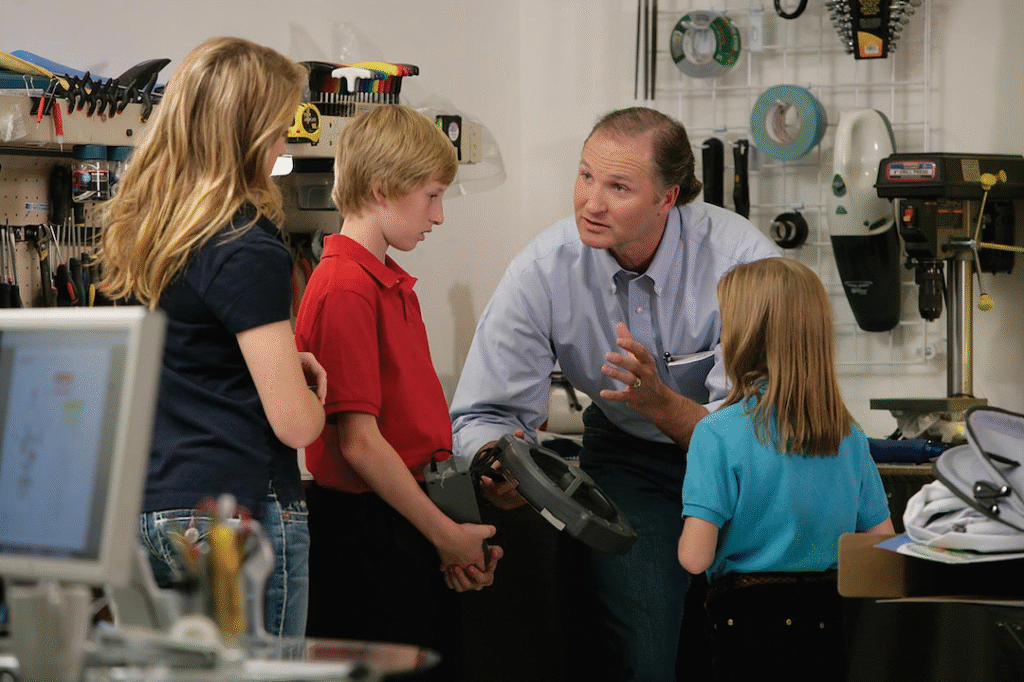
One easy way to foster creativity in youngsters is to create a space in the home where they are encouraged to explore their imaginations and develop their talents. When given the proper tools in a relaxed, gadget-free atmosphere, children will do what comes naturally - create!
Here are some simple steps to achieve that goal:

  1. Remove all electronic distractions - anything that runs on batteries or electricity - pull the plug, turn it off and put it out of sight. Your kids might experience some withdrawal symptoms at first (such as whining), but don’t worry, this will pass.
  2. Set up a brainstorming table or area of your home. Dedicate the space to creativity and one-on-one interaction with your child. Invest some of your time, turn off your cell phone, and find out what interests them. You’ll be surprised at what they’ll create and how well they will respond when you are involved.
  3. Get supplies - pencils, crayons, markers, paper, paints, clay, glitter - anything children might want to use to create something. Also have drinks and snacks ready, so their attention will not be drawn away when they get hungry or thirsty.
  4. Spend time with your kids and encourage them to tell stories through their art. One way to do this with young children is to have them draw pictures of things going on in their family; something as basic as Mommy or Daddy holding their hand is a simple place to start.
  5. Teach them how to creatively display photographs and memorabilia in a scrapbook around a particular event or theme. Creating a pictorial story, and what is sure to become a family treasure, will instill them with the confidence to attempt other creative pursuits.

Those are just a few tips to get started. They may sound simple, but they work; I’ve tried it with my own kids. Creative children are not only happier children, they’re more active learners who likely will grow up to be happier and more productive adults.

So, don’t just sit there, get crafty with your kids and you will have a relationship with them that has real depth - while their creativity soars.

Tug of War

It’s a challenging question - How do you know when all the people in your organization are really working in unison to move it forward? An analogy I like to use is a team engaged in a game of tug and war. They all need to be tugging at the same time, with equal effort.

Say you have 20 people on either end of a long rope, facing off and pulling hard. The ribbon tied in the middle moves a little in one direction, then the other. It appears as if everyone on your team is tugging with all their might. But a closer look reveals a common scenario.

One person has a really hard grip on the rope, but their posture is all wrong - they’re standing up straight, not leaning backwards or bracing with their legs, so they’re not ready to withstand a strong tug from the other side. Their heart and mind is in the right place, but the experience isn’t there.

Another member of the team has the right body posture and makes it look like they’re tugging hard, but their hands are barely touching the rope. For whatever reason, they don’t want to put in the effort.

Then, there is a person who has the correct posture and body alignment, a tight grip and is pulling hard on the rope. They’re giving it all they’ve got, but they’re at a disadvantage because they have to compensate for the others who are not.

Every once in awhile, an even bigger impediment comes along - someone comes up to the line, sees everyone tugging and sends a message like: “Hey, why are you tugging? It’s 5:01 p.m.!”

While the team may have had a lot of dysfunction, at least they were going in the right direction and the rope was moving…As soon as that bad apple arrives and makes them question the mission, the members are disrupted and lose momentum. They wonder if it’s time to give up.

Now, there’s a very uncomfortable, odd feeling that occurs between the bad apple and the team getting the work done. There’s going to be a clash of emotions. At that moment, the outcome is decided - either the team presses on to win, or the bad apple wins and the mission collapses.

When you get momentum going in the right direction, you need to recognize bad apples when they appear, because once you stop, it’s too hard to get the momentum going again, whether it be for a new invention, a new company or a game of tug of war.

Some bad apples may have had poor training or poor parenting. Some may be inexperienced. It’s a difficult mission to manage bad apples and remove the dysfunction, but it’s crucial because we all have to work harder to make up for their lack of effort and disruption. We’re always on a mission to get the dysfunction out.

It’s a big challenge - trying to get everyone’s mind and spirit moving toward a common goal, a shared mission. As adults, sometimes we need to draw on those childhood games, like tug of war, that were invented to teach us how to think right and get things done.

The lesson is simple - for a team to win, everyone has to put all their energy, experience and effort in and work together to accomplish the goal.

Inclusiveness

To me, one of the primary jobs of a leader is creating an inclusive work environment - It is vital to the success of any operation.

The number one question I would ask all executives is, “How good are you at fostering inclusiveness?” If you’re wondering what I mean, think back to a time when you felt like you were not included, when you felt like an outcast. How did that affect your actions? I remember a time in sixth grade when nobody included me; that made me feel like I couldn’t do the activity, so I didn’t.

You can’t have great leadership and take your vision to the top of the mountain unless your environment is all-inclusive because it takes a lot of people to climb that mountain. If you’re not making it clear that your environment includes everyone, at all levels, people won’t commit as much time and effort or be as creative as they can be.

Recently, we were pitching story ideas in our animation division. You could sense that some people felt no inhibition at all and weren’t overly concerned about what others thought of their ideas. Their enthusiasm and confidence let their creativity shine through. Others were not very comfortable in sharing their ideas, which dimmed their enthusiasm and their creative vision.

It’s a challenge when everyone doesn’t feel bonded enough to the group to open up. A good leader needs to know everyone in the organization and have an open and honest relationship with each one, so they feel comfortable in sharing their thoughts. Then, when a tough issue comes along it can be addressed in full, with a lot of smart minds focusing on it together.

A good leader also needs to be completely trustworthy and open with information. If not, you end up with a breach in trust, which leads to a non-inclusive environment and a high turn-over rate. How are you supposed to create something great if every time you turn around, another member of your crew has jumped ship to go somewhere else? The moral is - people are tough; they’ll grit it out with you through tough times if you include them and everyone gets to the goal together.

But how do you get people to bond and know you’re there for one another? You do it through creating and enforcing an inclusive environment. You need to bring the barriers down. Once your barriers are down, you expose yourself to potential criticism; you expose yourself to potential laughter. Guess what - that’s where all the gold is.

When people are uninhibited because they feel accepted, that’s when the fun really begins. It can start with just one person opening himself up to possible criticism or laughter. People might say, “Oh, my gosh - look at him go!” But the next thing you know, others are joining in, and then some more, until everyone is feeling included, confident and creative.

That’s when the storyboards and the product designs fly. It’s pure magic.

« Previous Entries